Pages

Showing posts with label book review. Show all posts

08 February 2020

The Lion's Mouth

"You must put your head into the lion's mouth if the performance is to be a success." - Winston Churchill

This quote is so appropriate for today's book review; not only does it refer to the title of the book, but it was said by the British Prime Minister during WWII, the time and setting of today's book.

A couple of years ago, we were in California for Christmas, and my father-in-law gave this book to his father. It was called Into the Lion's Mouth. I overhead them talking about it, how it was the book about the spy who supposedly inspired the James Bond character.

Intriguing!

I eventually added it to my book list (only about 6 months ago), and my sister got me a copy for my birthday...and I finally got to it!

And, boy, was it good.

Image result for into the lion's mouth book

Into the Lion's Mouth is the true story about Dusko Popov, a Jugo-Slav national who ended up becoming "the most important and most successful double agent working for the British during the war."

Dusko came from a wealthy, prominent family, and he was a young man when Nazi Germany came into power. Although a student at a German university, he despised the Nazis and wished there was something he could do to help fight against them. Eventually, he became a German spy who approached the British to work as a double agent. At the time of his early spy career, there was little that seemed to indicate that Germany would ever be stopped; but that did not stop Popov. He was a patriot through and through, and if he could have any part in potentially stopping the Germans some day, he was going to do it.

Popov was well-known as a playboy. He almost always had a girlfriend -- or two -- and he was known to live a lavish, expensive lifestyle. However, he was one of the most trusted spies for both the Germans and the British. As a double agent, Popov would get assignments from his German handler. He would share these assignments with the British, who would then give him misinformation to pass back to the Germans. This misinformation was absolutely essential to the Allied war movements, particularly when it came to D-Day. By giving the Germans misinformation, Popov was able to help the British have a clear way to invade France while the Germans focused elsewhere.

While his role may seem 'simple' enough, Dusko's spy life was certainly not without its dangers. But that didn't concern Dusko; he sought out danger and thrived an adrenaline. He was an excellent liar and played it cool under pressure. This came in handy multiple times as he was cross-examined by the Germans when his loyalty to the Nazis was questioned several times. Popov was willing to go anywhere necessary, even "into the lion's mouth", and risk everything for the right cause.

One thing I appreciated about this book was the more realistic perspective of what a spy actually experiences. When we see James Bond films, we often get the idea that Bond and other spies are people with no families who are angry with the world, lonely, and are fairly ruthless. In the case of the James Bond character, the is also in incredible ladies man, wooing any and every woman he meets. While there are some similarities, Popov gives a more realistic view. Although he was a ladies man, Popov often dated one woman exclusively at a time. In fact, his story talks of how he fell in love while on assignment in America. Popov also had a family who he loved very much and constantly worried about their safety and well-being during the war. In addition, Popov was probably quite conservative in his actions towards the enemy when compared to the Hollywood James Bond character. In fact, Popov mentioned in an interview that a real-life James Bond would have been dead in 48 hours. Popov, on the other hand, knew that to be a spy and stay alive mean more lying and deception than reckless fighting.

Reading Into the Lion's Mouth was absolutely fascinating. It was pretty incredible to read about a real-life spy -- not just a spy, either, but one of Britain's top spies in history -- that ultimately helped turn the tables for World War II. The author, Larry Loftis, also writes the story in an intriguing way. This book is sort of a mixture between a history textbook and a novel. He tells the story so eloquently but also offers documents and resources that show the reality of Popov's existence as an actual person but also his work as a double agent. By combining research and facts with a storytelling writing style, Loftis provides an exceptionally captivating read.

I'd definitely recommend giving this book a read for yourself!
03 January 2020

The Best Laid Plans of Mice and Men Often Go Awry

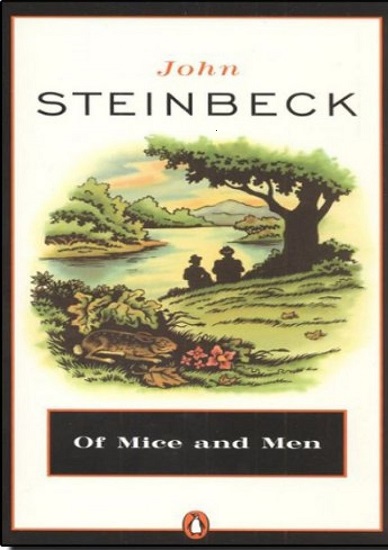
I may have mentioned this before, but my system for choosing which book to read next has sort of been just me going down the line on my bookshelf. Whatever book was next, that's what I read. I did deviate from that a few times to read something new, as many of those first books are familiar classics. This time, however, the next book was one I've always heard of and had a vague idea of the story but had never actually read: Of Mice and Men by John Steinbeck.

Image result for of mice and men book

I get it. How have I not read this book yet? It wasn't part of my school curriculum (perhaps a result of being in AP English?), and it wasn't one that I had read on my own yet. So, I picked it up and started reading...only to be surprised by the consistent and frequent use of profanity. I got a few pages in and thought, "I don't know if I want to read this."

So, I put it away.

A few weeks later, I was talking with my sister and mentioned how surprised I was about all of the language in that book. Her response was that it is still one of her favorites and that I should give it a chance.

So, I did.

Of Mice and Men is a short and easy read, but it is packed with powerful themes and meaning. I'll be honest-- I didn't catch all of the meaning behind the story at first, but the more I researched and thought about it, there's a lot more to this short book than just a story. Here's a quick synopsis (and note, this does contain spoilers!)

The Story
The story focuses on two men, George and Lennie, who are traveling together to a farm for work. The story takes place during the Great Depression, and the two men are going from farm to farm to work. They mention that they are working in order to fulfill this dream they've created: to buy a house and plot of land where they can work for themselves, keep all of the harvest, and "live offa the fatta the lan'." George is sort of Lennie's caregiver, as Lennie has some sort of mental disability. Lennie is strong and works hand, but he acts more like a child than an adult.

George and Lennie are running from their former town of employment because of something Lennie did that upset the townspeople. You don't know what happened until the very end of the story. The two arrive at their next place of work and meet the other workers. Slim is the leader of the group; Crooks is the African American worker on the farm who has a bad back; Carlson is one of the other workers; Candy is a worker who does mostly cleaning around the house because of his old age; Curly is the boss's son who is constantly picking fights; and there's Curly's wife, who seems to regularly flirt with the other men around the farm.

To keep things fairly short, the story follows life around the farm between Lennie and George, but all only within a matter of a few days. Slim's dog has puppies, and he lets Lennie have one (since Lennie loves soft things like puppies, bunnies, and mice). Lennie regularly pets the puppy, but sometimes he doesn't know his own strength. One night, he's out in the barn with his puppy, and he was playing with it too had, to the point where he accidentally kills it. Curley's wife pops into the barn to check if her husband is there, and find Lennie there. They start talking, and she brings up how soft her hair is. She invites Lennie to feel it. Lennie does, and he likes it so much that he keep petting, but gets harder and harder. Curly's wife tries to get away, but Lennie grabs on to her hair; he doesn't want to let go of the softness. Curley's wife starts to scream and tries to get away. Lennie doesn't want to get in trouble, so he covers her mouth and shakes her to try and make her be quiet; instead, he breaks her neck.

Lennie realizes what happened and runs away to the place where he and George said they would meet if something should go wrong. Someone discovers the body of Curly's wife and alerts the others, and they form a manhunt. George knows where Lennie is and knows it was probably an accident -- just like the last town they came from. But, the manhunt is out to kill Lennie, and George knows that Lennie will keep getting himself into trouble. In the end, George finds Lennie first and ends up killing in while telling him once again how they, together, are going to find their won plot of land and live as free men.

The Meaning 
When I first finished the book, all I could think was, "What a terrible ending!" It's heartbreaking how the story ends, and I didn't like it. Then, I started researching the bigger meaning of the story, and I gotta say, it doesn't make the book any happier. Overall, the themes behind Of Mice and Men are somewhat cynical and depressive. Here are just a few to show you what I mean:

Predatory Human Behavior 
Throughout the book, just about every character, in some way or another, shows or explains their feelings of extreme loneliness and isolation. Everyone feels alone and is seeking some sort of companionship. For Candy, it's his old and dying dog. For George and Lennie, it's each other. For Curley's wife, it's just about anyone who will lend an ear. Everyone is looking for someone to be near him because "a guy goes nuts if he ain't got nobody. Don't make no difference who the guy is, long's he's with you. I tell ya, I tell ya a guy gets too lonely an' he gets sick."

You would think that since everyone here experiences some sort of loneliness and is seeking a form of companionship, they would embrace the chance to provide that for each other. However, the story demonstrates how, all too often, instead of uniting in our common weaknesses and desires, we decide to turn on each other and prey on others' weakened states. We put others down in an effort to make ourselves feel better, to numb the sting of being alone for just a moment. And it happens way too often.

Friendships Don't Often Last
This second theme is just as grim as the first. As just mentioned, most characters in this story experience great loneliness, isolation, and depression. They long to come together and have a support group, to have friends and live in a way that they have each other's best interests in mind. They long for and seek a friend who will provide the comfort of knowing someone is there to protect them as they protect their friend.

Only George and Lennie have this sort of friendship and brotherhood in the story. "I got you to look after me, and you got me to look after you." However, Steinbeck doesn't capitalize on this fuzzy, feel-good idea of having a friendship like this. Instead, the friendship that George and Lennie have (as well as their goal to have their own land) is jeopardized by Lennie himself. In effect, Steinback is saying that they world is too harsh to sustain such friendships for too long.

The American Dream Is Nearly Impossible To Achieve 
Again, a fairly cynical theme here, but the story in Of Mice and Men demonstrates the sometimes harsh reality of how impossible it is to achieve the American Dream -- especially during the Great Depression era. I full-heartedly believe that with hard work, connections, motivation, and perhaps some financing, most people can achieve their dreams. Granted, it won't be smooth sailing, and there will be a lot of work to keep your dream once you get it, but I've always believed that anyone can do just about anything they set their minds to. Your situation doesn't have to determine where you go or what you do in life.

But, such is not the case in Steinbeck's story. Most of the characters mention how they long for something more than the life they have. George and Lennie have their idea of getting their own home and land. Curly's wife talks of how she previously was trying to become a movie star but instead settled for an unsatisfying marriage. Crooks mentioned how he's seen many men come through hoping for their own land but never get there. "Just like heaven. Ever'body wants a little piece of lan'...Nobody never gets to heaven, and nobody gets to land. It's just in their head. They're all the time talkin' about it, but it's jus' in their head."

In the end of the book, when George ends up killing Lennie, it's not that his dream of having his own landis gone entirely, but part of it is, since his dream involved Lennie. Now, George's full dream will never be realized. And neither will Curly's wife's dream of being a movie star. Or Candy's dream of joining George and Lennie. In short, Steinbeck demonstrates the harsh reality of how too often the American dream is just that -- a dream.

Afterthoughts
While I do appreciate the deeper meanings and themes behind Of Mice and Men, it still might be too much of a downer for me. I will say, though, that I'm glad I read it. It's written very well and presents important things to think about. If you haven't read Of Mice and Men yet, I'd say give a go at least once.  :)

29 November 2019

Honor the Fallen and Remember the Forgotten

Earlier this year, I was at Deseret Industries with some family, and of course I had to take a look through their book section. There, I found a few books about U.S. history. I've been on sort of a non-fiction adventure roll lately, and I've always loved learning about history, so I figured I couldn't go wrong with these books -- plus, they were only a couple of dollars each :)

On November, 11, I picked up one of these books. It didn't even hit me until later in the day that I had chosen to begin reading Unlikely Heroes on Veteran's Day. That sort of amplified the whole experience for me as I reflected on family and friends who previously served and are currently serving in the military or law enforcement. Too often I think we get caught up in our own worlds (myself included) to the point that we forget about those who sacrifice so much to keep us safe, and who protect our rights and freedoms, as wells as that of other countries.

When we do hear stories, we often hear of brave soldiers whose split-second decision making saved hundreds or prevented catastrophe. Or, we hear of those who died in the line of duty, protecting others. But such stories only tell us of a select few. What about the hundreds and thousands of others who are in the background, who did seemingly small things that ended up changing the course of action or the results? We don't usually hear their stories.

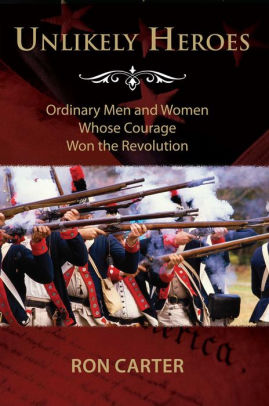
Unlikely Heroes: Ordinary Men and Women Whose Courage Won The Revolution is just as it says -- a collection of stories about the 'ordinary' people whose courage and bravery made it possible for the United States of America to become its own nation and keep its freedom.

Image result for unlikely heroes, book

The Logistics 
Unlikely Heroes is an easy read, and it is full of short but powerful stories. Some stores are only a page or two while others are about 10. But, most stories I could read during my break, or sit down and enjoy fairly quickly before going to bed. The author, Ron Carter, tells the stories in an easy-to-follow and engaging manner. I imagine he took some liberty in describing situations or character feelings, as we can't always know exactly how these people felt in every situation. Nonetheless, the events recorded and retold in these stories are pretty incredible.

The Stories 
As I read through the various stories in Unlikely Heroes, I felt a powerful sense of awe and respect for the people who made up our early nation. These people were fighting for rights they believed to be self-evident, and many were willing to do whatever it took to get those rights and keep them. For some, that mean eavesdropping on British plans and risking everything to deliver the news to the American army. It meant taking a stand in your own home and opposing British soldiers when they pressed you for food or lodging. It meant standing firm with your band of only a few hundred men against the thousands of British in an effort to give General Washington more time to gather the rest of his men. It meant running across the battlefield as an unsuspecting woman to get more gunpowder so that the fort didn't fall into enemy hands. It meant financing practically the entire American army and war efforts. It meant continuing to fight during harsh winter months even when there was no money left.

Many times as I read these stories, I tried to put myself in the situation I was reading. Would I have had the courage to risk everything for such a cause? Would I have stood my ground and kept fighting even when everything pointed to defeat? I like to think that I would, but I can't say. One thing is for sure: I am extremely grateful for those who lived in American in the 1770s and 1780s who did risk everything and did stand their ground.

The people in these stories probably aren't in textbooks or part of your typical recaps of the American Revolution. But truly, without the help of these ordinary people, the young U.S. nation would never have been able to pull off the extraordinary task of receiving aid from the French and defeating the British. Unlikely Heroes is a simple yet powerful way to honor those who have fallen in the fight for freedom, and to remember those who have been forgotten.

28 October 2019

We All Need Help Sometimes

Hello, again!

I know it's been a while since our last chat, but trust me -- I've still been reading! This last book just took me a bit longer to get through than others, but that doesn't mean it wan't just as great!

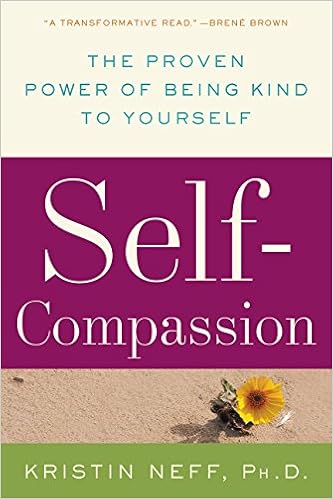
The book of today's discussion is Self-Compassion: The Proven Power of Being Kind to Yourself by Kristin Neff, Ph.D.

Image result for self compassion: the proven power of being kind to yourself

This is sort of the first self-help book I've ever read. For some reason, I was always hesitant to pick up a self-help book because that would be admitting that I need help. But, you can read self-help books just to learn more about a topic. And, let's be honest, we all need help sometimes in certain areas, and I certainly need help in the self-compassion department.

This book has really been a huge eye-opener for me. I learned so much, and I could see myself trying to apply the things I learned even as I was still reading through the book. Kristin Neff dives into the world of self-criticism that we all know too well, and also into its parallel universe of self-compassion and how we can be kinder to ourselves. She provides a lot of detailed information, but she presents it in a way that is engaging and fun to read. There are exercises for you to do on your own within each topic so that you can really start to understand and make self-compassion a part of who you are.

What is Self-Compassion? 
The term self-compassion itself is pretty self-explanatory. It means to have compassion for yourself. Kristin Neff states that "having compassion for yourself is no different than having compassion for others." When we have compassion on someone else, we first see that they are suffering in some way. Then, our feelings are moved by their suffering, and we respond to those feelings by experiencing warmth, love, and perhaps a desire to help them.

Compassion on others also involves being understanding when others make mistakes. We know that no one is perfect, so when those around us mess up, having compassion can make it easier for us to forgive and move on, knowing that we can't expect them to be perfect. Finally, compassion towards others comes from realizing that all human beings have a shared experience. We all suffer, fail, make mistakes, and are imperfect -- that's just part of being a human being.

All of that comes with having compassion on others, but self-compassion involves acting the same way towards yourself. When you are having a difficult time, experience failure, or notice something you don't like about yourself, we can express compassion to ourselves by first recognizing that we are suffering. Next, we can let our emotions respond to that realization, leading us to find ways that we can comfort ourselves instead of ignoring the pain we feel. It means recognizing that you are a human being destined to make mistakes, and that not everything in life is going to go the way you want it to. It also means recognizing that all other humans suffer in some way, and that you are not alone in your difficulties.

Why Self-Compassion? 
Take a moment to review your thoughts from the last 24 hours. What did you say to yourself? Did you put yourself down at all? Did you say anything kind to yourself?

In most cases, we are most likely to say things that put ourselves down than things that are kind. Why is that? It's speculated that we are more prone to point out our flaws, difficulties, and imperfections because we hold ourselves to impossibly high and perfect standards. We can understand when others make mistakes or struggle because that's just the way life is. But when we make a mistake, it's unacceptable.

That's not the way we should be treating ourselves. Instead, we should recognize when we are feeling discouraged or are struggling, and then comfort ourselves. We can tell ourselves, "I understand that this is a difficult situation or task for you, but it's okay. Let's take this one step at a time, and I will make it through."

Neff and her colleagues have performed a variety of studies on self-compassion. In fact, Neff is one of the leading experts on the topic, being one of the first to even officially 'discover' or 'create' such an idea in the psychology field. Throughout her studies, she has found that those who practice self-compassion are happier and have an easier time working through difficult situations.

Self-compassion doesn't mean you won't get upset, angry, disappointed, etc. But, it can help you to more quickly recognize what you are feeling, take a step back, understand and comfort yourself, and move forward with a clear, positive mind.

Experiencing Self-Compassion
After even the first chapter of Self-Compassion, I found myself trying to practice it in my own life. I found that I could more easily recognize when I was thinking negatively about myself. After recognizing them, I could sort of work out in my mind why I maybe felt that way and understand where I was coming from. For example, lately one of the main thoughts that keep coming to mind is, "You're not accomplishing anything important or of value in your life." I think the main reason for this is that I have this list of things I want to accomplish in my personal life (ie: write a book, start my own business, exercise more, etc.). But it feels like I never get any closer to accomplishing my goals.

As I started learning about self-compassion, I would recognize when I had those thoughts about myself. Instead of just saying, "Yeah, you're right. I'm not doing anything with my life right now", I could say, "I understand that you have these things you want to accomplish, and that you're frustrated that you aren't there yet. This is a really busy time in your life. You're working full time and have 2 callings in church that take time away in some evenings where you could be working on other things. You have a home and husband to care for. While you may not quite have the time you want to accomplish those specific goals you have, you are accomplishing other things that are just as important."

I've always thought that we, as human beings, generally need to be kinder to ourselves, but when you don't really have a structured way to do that, it can be easy to slip back into the habit of putting ourselves down. Self-Compassion: The Proven Power of Being Kind to Yourself has helped me find that structure I need to know how I can be kinder to myself. And you know what -- it feels pretty great!  :)

I invite you to practice self-compassion. You can learn more about it by reading Kristin Neff's book, or you can visit her website at https://self-compassion.org/. On her website, she has a self-compassion quiz to help you see where your self-compassion levels are and how you can improve.

Instead of trying to validate ourselves and find worth through the opinions of others, let's take our self-worth into our own hands. The only people who really understand and know you are yourself, your Savior, and your Heavenly Parents. Sure, others can know you, but they don't know all you feel, all you think about yourself. A lot of the time, people just see what's on the outside and what we do -- and then they make their judgments. If we place our self-worth only on the opinions that others have of us, we're going to find that life is pretty miserable and impossibly demanding. Instead, let's have compassion on ourselves. We are going to make mistakes. We are limited in our abilities. We are imperfect. But that's okay. You are still an incredible person who offers so much to this world and lives of those around you. You deserve compassion. And if the world isn't giving it to you, you can at least give it to yourself.

21 August 2019

The Important Thing Was That We Were Alive...

This is a story of survival.

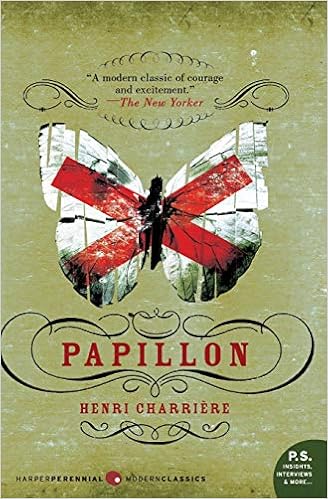
It is a story of false accusations; harsh punishments; true friendship; loyalty; escape, capture, and escape again. And it is a true story. This is the story of Papillon.

Image result for papillon book

The Story

Henri "Papillon" Charrière lived a life in the Paris underworld with thieves, prostitutes, and criminals. He was a decent man, was honest and true to his word, and never hurt others. For being part of the criminal underworld, he was a good man. 

Then, on October 26, 1931, all of that changed. Papillon was wrongly convicted of murder and sentenced to hard labor for life on the French penal colony of Cayenne, off the coast of French Guiana. It was an extreme sentence in any case, but particularly for an innocent man. The main reason for this was that the government officials wanted to keep men like Papillon off the streets, away from "normal" citizens. They didn't want to taint their towns. So, rather than rehabilitating criminals, they simply sent them away and didn't care about what happened to them. Plus, there was some inner-department bribery and lying going on that brought forth false witnesses against Papillon. 

From the moment he was locked up, Papillon set his heart on escaping. His first plan consisted of escaping, returning to Paris, and seeking his revenge on those who convicted him. As time went on, and as Papillon got more and more desperate for escape, his plan changed more to simply escaping his prison and living out the rest of his life as a peaceful, normal, and respected citizen. He simply wants to "prove that I can be, that I am and will be, a normal person. Perhaps no better, but certainly no worse than the rest." 

The book covers Papillon's life over the next 14 years as he struggles to escape and restart his life. Throughout the story, Papillon becomes instantly respected among the other prisoners, as well as the wardens and prison guards. Of course, he still makes some enemies along the way, but people come to know him as a trustworthy and honest man. 

In a matter of months, Papillon succeeds in his first escape, and he ends up living with a group of indians for about seven months in South America. Eventually, he is recaptured and sent back to French Guiana. Over the course of the next 13 years (roughly), Papillon endures years in solitary confinement and makes more than 10 escape attempts -- all of which fail. The more times he fails, the more he feels that God has abandoned him, that luck is not on his side. But, "wherever there is life, there is hope." As long as Papillon was alive, he was going to do all he could to escape, or at least die trying. 

Eventually, Papillon escapes from Devil's Island, the smallest of the three islands in the Islands of Salvation cluster where he was held prisoner. Not only is this island surrounded by rocky cliffs, but it is considered inescapable, and no one has ever escaped from it...that is, until Papillon does. He eventually reaches Venezuela, where he becomes a citizen and lives out the rest of his life in peace. 

As Papillon reflects on his final escape, he states, "I had sensed Him at night during the thousands of hours I had spend buried alive in dank dungeons without a ray of sunshine; I touched Him today in a sun that would devour everything too weak to resist it. I touched God, I felt Him around me, inside me. He even whispered in my ear: 'You suffer; you will suffer more. But this time I am on your side. You will be free. You will, I promise you.'" 

Papillon suffered more than any man should ever have to, especially because he was innocent of his charge. But, "sometimes God wills for one of his children to experience human wickedness so that he will emerge stronger and nobler than ever." And that's just what Papillon did. 

A Man of Honor 

Something that I really enjoyed about Papillon's story was the insight you get into his true character. Throughout his many escape attempts and time in prison, Papillon had almost endless chances to kill people who got in his way. Granted, there is one time where he does so, but generally speaking, Papillon is a good guy who doesn't want to harm anyone. In most escape stories, people are so desperate to get out that they don't care about others. Papillon is not that way, and I appreciate his honor is many times having someone else's life in his hands but choosing not to take it. However, he was still not someone to mess with.

Something else that I enjoyed was Papillon's relationship with his friends. Some he knew from the outside world, and others he met in prison. But, when Papillon felt that someone was a man of honor, he would step in and help protect them. He would negotiate on their behalf to prevent fights with other convicts or ease their punishments. Papillon was also generous to those who helped him escape. He paid them money, or made his plan in a way that would make it so that others who were involved would not be caught and punished. In return, his friends made it possible for him to come out of solitary alive and healthy, and made it possible for him to eventually escape for good. 

Because Papillon is such a decent guy, I found myself rooting for him. He becomes an endearing character that you recognize as just trying to get his life back. Mr. Charrière tells his story in such a way that you feel like you are there with him, experiencing the same emotions and physical strain that he is. 

Side note: I will admit that, while reading through his story, I did get a little confused every now and then about who was who. There are so many different characters and friends that I sometimes found it difficult to keep them straight. But, that's probably just me. The story is still incredibly well-written and clean. 

A True Story

The book Papillon is based on Henri Charrière's actual story. Granted, many people claim that he took parts of his story from others' stories, and he is known to be an elaborate storyteller. However, Henri was actually convicted of murder and sent to French Guiana, from where he did eventually escape and live in Venezuela. The details of the story may or may not be 100% true, but does that really matter? Papillon is an inspiring tale that has touched the hearts of millions of people over many decades. 

The Film 

Papillon was turned into a major motion picture in 1973, and it starred Steve McQueen and Dustin Hoffman. Growing up, my family watched old, classic movies all the time, and Steve McQueen is one of my all-time favorites. But, for some reason, I've never seen this movie! I've known for years that McQueen was in this movie, and I actually own a copy! But, I've never watched it. Until now. Now that I know the story, I can't wait to watch the movie. Henri Charrière was actually on set of this film as an advisor, so I'm hoping it's a fairly accurate portrayal of his story. 


29 July 2019

The Man Who Mistook His Wife For a Hat

Hello, again!

Well, you guess it - I finished another book, which means it's time for another book review :)

While I was reading The Sociopath Next Door, one of my coworkers recommended this book, mentioning that if I liked psychology books, I should definitely read this one. I added it to my list of books and thought that I would get to it some day... and some day I did!

Can you believe that I used to not have a library card??

Right. An avid reader like myself didn't have a library card. But, I finally got one a couple of months ago, and the first book I checked out was the one my coworker recommended:

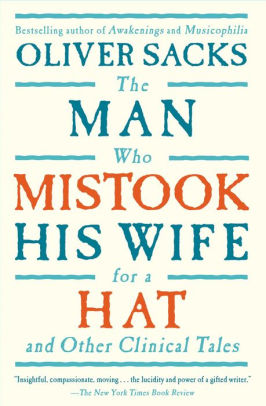
Image result for the man who mistook his wife for a hat

Dr. Sacks is a neurologist, and his book, The Man Who Mistook His Wife For a Hat, is a compilation of a variety of clinical tales from Dr. Sacks' experiences with patients. These clinical stories aren't about your typical neurological conditions; generally, the patients he talks about in these stories experience disorders that are more uncommon or unfamiliar. And let me tell you - these stories are fascinating!

I don't know much about psychology. I never studied it or anything, but I have a general understanding of the brain and some mental conditions we as humans can suffer. In his book, Dr. Sacks does use a good amount of technical terminology, which (not going to lie) got confusing at some points. But, Dr. Sacks still does an excellent job of describing each patient's situation, as well as general condition symptoms, so that us general folk can understand.

Each story is anywhere from a page or two to ten or more, and each discusses its own different situation and patient. I loved learning about Dr. Sacks' various experiences and some of the neurological conditions that are out there. It was interesting to learn about conditions I've never heard of before, and to learn more about those I already know of.

What I particularly liked about this book was that Dr. Sacks didn't just tell the clinical side of the story. He talks about the people he visit with and treated. He talks about how their conditions affected them, about their concerns and questions and fears, about the joy they sometimes had as a result of their condition -- in short, Dr. Sacks kept his patients as real people in his book. He describes their stories in such a way that almost makes you feel like you know them, too, which makes it easy to sympathize with these real people and the challenges they face from their conditions. I very much appreciate Dr. Sacks' consideration as he tells these stories.

From patients who no longer recognize faces or feel disconnected to their limbs to patients who experience Turret's syndrome and incredibly math-centered minds, Dr. Sacks provides a variety of real stories that will both fascinate the mind and tug at the heart. If you're looking for a good psychology read, The Man Who Mistook His Wife For a Hat is an excellent choice!


10 June 2019

When A Man Turns A Blessing From His Door, It Falls To Them As Take It In

Alrighty, folks! Are you ready for another book review? Today's book of choice is Silas Marner by George Eliot.

Image result for silas marner book cover

I read this book back in high school, and I remember really enjoying it. So, when it was next book on my bookshelf, I started reading with great excitement and high expectations...both of which were put out fairly quickly. Okay, that might seem a bit harsh. I'm not saying that Silas Marner is a bad book. It is, in fact, a great book, but it's written in a certain kind of way that is not my personal preference.

George Eliot's writing style involves lengthy and wordy sentences, and lengthy descriptions of things that do not quite seem as pertinent to the story or characters. In all honesty, reading this book took me quite a bit longer than I thought it would because I had to read slower in order to catch all of Eliot's sentences within sentences (thoughts breaking up other thoughts and then returning to the original thought, etc.). It felt like Eliot was using 100 words to describe something that only needed 20. Plus, the story felt really slow to me. Really slow. To me, it seems like there were several sections of content that didn't add anything to the story or characters. Perhaps they did in some way, but they didn't feel particularly necessary for me.

This was especially the case in the first part of the book. In part two, things seemed to move a little faster, and the content seemed more relevant. To me, the second half was much more enjoyable, and the book ended on a good note.

Summary

The story behind Silas Marner is actually a good story. It is focused on the main character, a man named Silas Marner. Once a devoted a highly religious man from a different town, Silas was not a quiet, solitary man who everyone is slightly wary of. He no longer believes in God or goes to church; he left that life behind when he was wrongfully accused of and framed for a crime he didn't commit...and framed by his good friend and colleague.

Since moving to his new town, Silas has become a weaver, and a good one. Over the years, he has collected a stash of gold from his work, and his money soon becomes his most prized possession...that is, until it's stolen. Suddenly, his life is dark, joyless, and empty. Then, one night, a lost girl wanders into his home, being drawn in by the warm fire. He adopts the girl, and she fills the holes in his heart with more than the gold did when he had it.

There are some additional side stories of other characters who are involved in this book, but that will get very detailed, and I don't want to give away anything. So, I'm just going to leave the summary like this.

Love Brings The Greatest Joy

To me, there are two main messages from this book. First: the truth of how having someone to love, or family, can fill your heart with all of the joy and purpose you need or want in life, more than any worldly possession can give. Before Silas adopted the young girl, his gold was his single most prized possession, and it meant the world to him. Every night, he would pull out his money bag, which he kept hidden from others, and count the coins, watching them glisten in the firelight. In short, he was obsessed. But material things don't last, as Silas eventually finds out. His gold is stolen, and he suddenly has nothing.

But the girl he adopts not only fills his heart with the joy he had with his gold, but even more so. His daughter becomes his most precious possession, and he does everything to make her happy. She means so much to him, in fact, that when his gold is discovered some 20-ish years later, he is practically un-phased by it.

I think in this book, Silas demonstrates just how we need to let people we love be the most important things in our lives. Truly, family and love will fill our hearts with more joy than anything we could ever purchase or acquire. And Silas isn't the only example of this. Just take a look at the world around us, and you'll see that true happiness lies in relationships, in having people who love us and whom we can love in return.

Don't Let Your Situation Define You

The second lesson I pulled from this book is to not let your situation define who you are or how you act. There are two instances in Silas' life where he is dealt some extreme misfortune: first, when he is framed by his friend for a crime he didn't commit, and secondly when his hold is stolen. In both situations, Silas retreated into a world of darkness, bitterness, and despair. "[Any] kindness fell on him as sunshine falls on the wretched - he had no heart to taste it, and felt that it was very far off him."

Because Silas was so wrapped up and focused on what wrong had come to him, any effort made to cheer him up or console him sort of dripped right off. In short, he focused only on the bad that happened and let that affect how he interacted with others (he didn't interact with them), and how he felt about himself.

Life is full of hardships (shocker, I know). We are going to face unfortunate events caused by our won doing or that of others. I'm not trying to downplay how difficult some of life's challenges can be; I completely understand and empathize that many of us experience things that we never thought we would, or things we feel we just can't get through. And I'm not saying you should never be sad or frustrated or discouraged by the things that happen. You are going to experience those feelings, and that's okay.

However, Silas let those feelings rule his life, which resulted in him having sufficient joy or no joy at all. That's no way to live. It's okay to feel cheated, angry, or disappointed at times, but we shouldn't let our situations control how we live out our life. Instead, we can mope for a bit, but we need to soon push that aside and focus on the good things that are still around us. I'm not saying that will make challenges go away or make things better right away, but it can definitely be happening in your life. And I'm confident that by not letting the negative control your life, you will be able to face your challenges with greater strength, hope, and success.

Final Thoughts 

This is just one other thought I had and wanted to share. There's this quote from the book: "When we are treated well, we naturally being to think that we are not altogether unmeritorious, and that it is only just we should treat ourselves well, and not mar our own good fortune."

Read that again. Isn't it powerful?! Really quickly, unmeritorious means "unworthy, lacking value," etc. So, essentially, this quote is saying that as we are treated well, we start thinking that we, ourselves, are not unworthy, that we have value. And as a result, we should treat ourselves well! Have you ever had an experience like that? I know I have. There have been many times in my life where I'm sort of beating myself up, putting myself down, when someone says something nice to me or about me. Almost instantly, I feel better about myself, and I'm reassured in the thought of "Maybe I'm not as bad as I thought."

I'm positive all of us have experienced something like this before...which means everyone you meet has, too. In fact, they may be feeling a little low about themselves when you talk with them. You never know when someone is feeling a bit down -- let's be honest, we're all pretty good at hiding how we actually feel. So, treat them well! Always! Doing so can be just what they need to feel better about themselves and realize that they are worth and they do have value.

And when someone treats you well, especially when you are down, believe the good things they say, and take it to heart! Let those things rebuild your soul and your self-esteem because YOU DO HAVE WORTH. YOU DO HAVE VALUE! :)


17 May 2019

You May Lie

Hello, again!

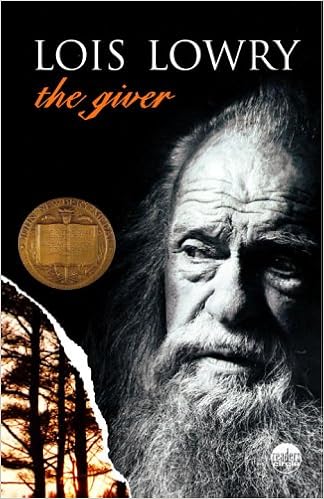
I am still continuing my goal of reading 20 books so far this year, and I'm well on my way. I finished this book a while ago, but forgot to add it to my review, so here we are. Today's review is on The Giver by Louis Lowry.

Image result for the giver book cover

I grew up reading this book, and I've always enjoyed it. I think it is well-written, but it is also written in simple enough language that young readers can also enjoy it, and that makes it easy to finish the book in just a few days. For those who are unfamiliar with the book, here is a quick synopsis:

This book follows the story of a young boy named Jonas, who lives in a utopian society that is governed by a group called The Elders. There are strict rules and regulations, but all in the name of keeping everyone happy, healthy, and safe. When children turn twelve, they are assigned their jobs in the community. Jonas is given the job of Receiver of Memories. The Receiver works with the current Receiver, who is now called The Giver.

The Giver is the one and only person in the community that contains memories of what the world was like before the utopian society was created. You see, the Elders removed memories of certain things (including pain, war, famine, etc.) in an effort to avoid conflict or hardship. The Elders have also created controlled weather to avoid bad crops, and have removed color to avoid differences between others. But, The Elders need someone to keep the memories in case they find themselves in a situation and need some guidance. The Receiver of Memory can use his/her knowledge of how things worked before to help The Elders avoid a repeat of past resolutions that ended up poorly.

As Jonas receives memories, he learns about color; sunshine and snow; feelings of love, anger, heartache, and joy; and more. He also learns that the society in which he lives is not as perfect as everyone is led to believe. In the end, The Giver and Jonas work together to create a plan where they can share the memories with everyone in the society...but will they be able to accomplish their plan before getting caught?

An Appreciation of the Little Things

One thing I love about The Giver is reading about how Jonas discovers simple things for the first time. Things like color, the feeling of wind on your face, and experiencing love. He finds such joy and marvel in these that we, who have them in our daily life, take for granted. Jonas wonders how he could've lived a life without these things. I just love Jonas' reaction to these things, and it's a reminder to me to not take these 'normal' things for granted, because they really are beautiful and magnificent.

The Release Ceremony

In Jonas' society, there are many ceremonies that take place, all of which are projected as positive things that help their society stay unified and controlled. All memories are recorded for The Elders, but none of their community members can see them, so just about everyone doesn't know what actually happens in the Ceremony of Loss for the elderly or the Ceremony of Release for some newborns.

As the new Receiver of Memories, Jonas has the authority to watch any recorded ceremony. In one instance, he watches a Ceremony of Release, as performed by his father, with a set of identical twins. Whichever is smaller and not growing as much is released. Jonas thinks it makes sense, as they can't have two identical people walking around town. But when he learns what a Ceremony of Release actually is, he can't believe it. If you haven't read the book, I must warn you: this is a spoiler!! So, if you don't want to know, don't read the rest of this section.

The Ceremony of Release is, in no mixed words, the killing of whatever newborn or elderly member is involved. So, this means that the smaller of the two twins is killed with an injection, and the bigger one is granted life.

This part of the book always gets to me. Not only in this 'ceremony' completely inhumane (for a lack of better word), but it strikes home. You see, I am a twin. I'm not sure which one of us was smaller when we were born and and in the first few months, but what if we lived in a society like Jonas'? I cannot imagine the thought of one of us not being here simply because we weren't growing quite as fast as we 'should'. I just think about that twin that lived in The Giver. I am confident that they would go about their life feeling that a part of them was missing, that something was different about them...and there would be! But, they would be told that it's just normal developing emotions and to take something for it something. They would never know the truth of what happened to their other half. I doesn't mean for this to be a downer, but this part just always gets to me and evokes a powerful reaction in my heart.

What Happens At The End of the Book? 

Note: if you haven't ready this book, this is also a spoiler!!
Okay, to be honest, I always thought of the end of the book as follows: Jonas and Gabe make it through the snow to a cabin, where they are rescued and enjoy a life of song, love, color, and more. Perhaps this is my inner innocent child thinking that everything ends happily, and I've always just accepted that ending.

However, I was talking about this book with some of my coworkers a few months ago, and discovered that there is a second possible interpretation of the end of the book, and it blew my mind. So, Jonas and Gabe have escaped their society, but as they continue their journey, winter comes, and Jonas quickly finds himself trudging through cold snow, trying to keep himself and Gabe alive. He uses memories of warm and sunny beaches to keep the infant from freezing, and to give himself hope of finding a way out.

At one point, they reach the top of a hill. There's a sled at the top. Jonas gets on with Gabe, and they slide down the hill, the icy air biting at their exposed skin. At the bottom of the hill, there's a cabin with lights on, and Jonas can hear singing.

That's how the book ends. Now, if you're like me, you take this as Jonas and Gabe reaching their destination, finally finding a place in the real world where they can be free. But, if you take my coworkers perspective, this is just a memory. You see, The Giver gives Jonas a memory exactly like that to teach him about snow, cold, and more. With this same scenario repeating at the end of the book, it's possible that Jonas is recalling this memory and maybe sharing it with Gabe as a sort of comfort for both of them as they die in the frozen wilderness.

I had never considered this alternate interpretation before, and it blew my mind: what if Jonas and Gabe hadn't made it after all? It's pretty unclear as to whether or not the ending is a memory, so I believe it's up to the reader's interpretation. But I had seriously never thought this alternate ending until recently. But, it makes sense as a possibility.

What ending do you choose?


10 April 2019

Maybe There Is A Beast...Maybe It's Only Us

Welcome back, readers!

Now that I've finished the books my sister lent me and Rachel's newly published book, I'm back to making my way through the books on my bookshelf. Up next was a familiar story, although I've only read this book once before. But, it's a story that's hard to forget, especially because of the poignant shift from humanity that it depicts. I'm talking about none other than Lord of the Flies by William Golding.

Image result for lord of the flies book cover

Even though I'd only read this book once before (and it was many, many years ago), I remembered that it was a haunting story of survival. If you haven't read this book, here's a quick summary: a group of young English boys get stranded on an island after their plane crashes. They build a fire to use for a signal, and they establish a sort of community. Everyone has responsibilities to carry out daily, such as tending to the fire, catching or gathering food, and building shelters. But, as most young boys, their interest in these things doesn't last long. Plus, some of the boys are very young and can't contribute much. The fire and shelters become neglected by most, although some still try to maintain order. Eventually, two boys fight for authority and end up creating two separate groups. One still focuses on getting a signal out to be found, and the other, led by the main hunter, becomes obsessed with hunting the pigs on the island and living a life of no responsibility. But it doesn't take long for the hunting instinct to take over to the point where two boys are killed and another hunted up to the point when they all get rescued.

While reading Lord of the Flies, it's hard not to think about the animal instinct within all of us - especially since that's the focus of the story. Not only does it depict that humans do have an animal instinct of hunting and killing, but it focuses on how quickly one can turn from being a civilized, rational human to more of an animal.

Given the right circumstances, our suppressed animal instincts can take over. In the case of this story (and I'd guess in most real-life cases), the animal instinct kicks in as a mod of survival, when one is placed in a life-or-death situation. In Lord of the Flies, the boys (I'm not going to use names and give away who does what) are constantly in survival mode. While many of them don't seem to care that they're stranded, I imagine all of them are feeling some sort of survival instinct as they search for food in the forest, sleep on leaves, and wear the same ragged clothes for weeks.

For most of the kids, they can stay rational throughout the entire ordeal. However, for one kid in particular, the inner animal instinct comes out fast and takes over. This kid is the designated leader of the hunters. I believe that his animal instinct starts to take over the moment he goes out to hunt a pig. The adrenaline of sneaking through the forest, stalking his prey, and ambushing it becomes insatiable. And soon enough, anything becomes prey -- including the other boys, and particularly the boys he doesn't like.

At first, it's clear that the kid gets a thrill out of hunting, but he still remains a human. But as time goes on, you can start to see the animal come out a little more and more as he begins thinking of ways to improve his hunting, such as camouflaging himself with mud and paint. Then all at once, it seems, he snaps. He gives in completely to the animal inside. He now enjoys being in control and the idea of the hunt, of stalking something - or someone - that is unaware of where he is or what he is about to do. And suddenly, that boy is now a monster.

The other side of the spectrum:
Lord of the Flies is a clear depiction of the hunting truth that it's easier than we think to submit to the animal within us. However, I think there's another lesson here, too. When reading this book, most people focus on how we can turn animal, but I think it's important to recognize that we can also stay human in the same situations. The Lord of the Flies depicts a handful of kids who lose all sense of reality and humanity, but there are still those who don't. Not everyone becomes a barbarian. Not everyone loses sight of reality.

People can be in the same circumstance and react differently. Some will succumb to animal instincts while others don't. With that said, I think it's clear that it's not the situation that causes us to change; it's our response to it. Are we willing to let go of reality, humanity, civilization, and rationality? Are we willing to give in to our animal instincts? I think some will be more willing than others, just like in Lord of the Flies, but I think there are those who will fight to stay sane and fight to stay human.

But hopefully we never have to face a situation where we have to find out which we are more willing to succumb to.


20 March 2019

Once Upon A Time

Greetings, fair readers!

On today's book review adventure, we'll be stepping through the glass and getting a new perspective on a classic story. We will be stepping back into sixteenth-century Germany, forward into futuristic Scotland, and a few places in between as we travel through time in Shattered Snow by Rachel Huffmire.

Sounds pretty interesting, right? Well, you are correct! While fantasy isn't my usual go-to, I was excited to give this book a try. You see, I've had the pleasure of meeting Rachel Huffmire in person, and I just had to read her book when she finished. Rachel is a friend of my mother-in-law, and I met her a couple of years ago when we were in California for Christmas. We chatted for a few minutes there, but right away, I was impressed. Rachel is the mother of two little boys, and she still finds time to write - and publish - a novel on top of everything else that she does! Not only that, but Rachel is very kind and friendly right from the moment you meet here. She is very positive and keeps encouraging me to achieve my own writing goals. She's just an all-around wonderful person, and when she published her book, I had to read it.

Image result for shattered snow, rachel huffmire

To begin, when I first heard what Rachel's book was called, I was immediately intrigued. Shattered Snow? Snow can't shatter. What's that all about? It was an instant hook for me.

Shattered Snow is a time-traveling twist on the classic story of Snow White. Keltson is a rebellious and wanted time traveler (since time travel has now been banned in 2069), but his purpose of time travel is completely selfless. He works with clients who find people in history that die or experience unnecessarily hard lives, and he helps rescues them from their fate. But, these people that Kelston and his clients save are minor and insignificant in the grand scheme of history, so they won't disrupt how the future plays out.

One of Kelston's clients, Lilia, finds a young girl named Margaretha who succumbs to the sad fate of being poisoned to death. Lilia's goal is to save Margaretha, but as she gets further into her mission, Lilia's goals change. Eventually, Margaretha, a young and unsuspecting sixteenth-century German girl, is thrown into time travel, a terrifying and seemingly evil thing to her. The story becomes one of survival as Margaretha fights to stay hidden and stay alive. Meanwhile, Kelston is trying to avoid arrest and prevent history from changing as Lilia decides to take matters into her own hands. It's a chaotic mess of unraveling history that you hope will be fixed in the end.

While there are several different stories going on at the same time, Rachel does an excellent job at keeping each story straight and easy to follow. The book is for a young adult audience, but it still very engaging for adults and readers of any age.

Even though time travel and fantasy book usually aren't my first pick, I ended up enjoying Shattered Snow very much, reading it every chance I had. The idea behind Shattered Snow is so clever! Personally, this story isn't what I would normally think of as fantasy simply because there is no magic, extraterrestrial travel and creatures, or anything like that. Instead, the story is all about science, and the way that Rachel makes time travel possible is so unique and clever. Plus, Rachel creates excellent characters that really help bring the story to life.

So, if you're looking for a good read that will shatter your expectations, go out and get Shattered Snow by Rachel Huffmire!


22 February 2019

Double Duty


Hello, again!

It’s been a while, but that doesn’t mean I haven’t been reading. In fact, I’ve read several books, and now it’s time to play catch-up on my reviews.

So, when I started my reading goal, I just started going through my bookshelf, reading the books in order as they were there, whether or not I actually wanted to start reading them in the first place (some books just sound more appealing than others, ya know?). Well, I was doing that, and then my sister let me borrow 2 books, so I put my bookshelf on hold and read those.

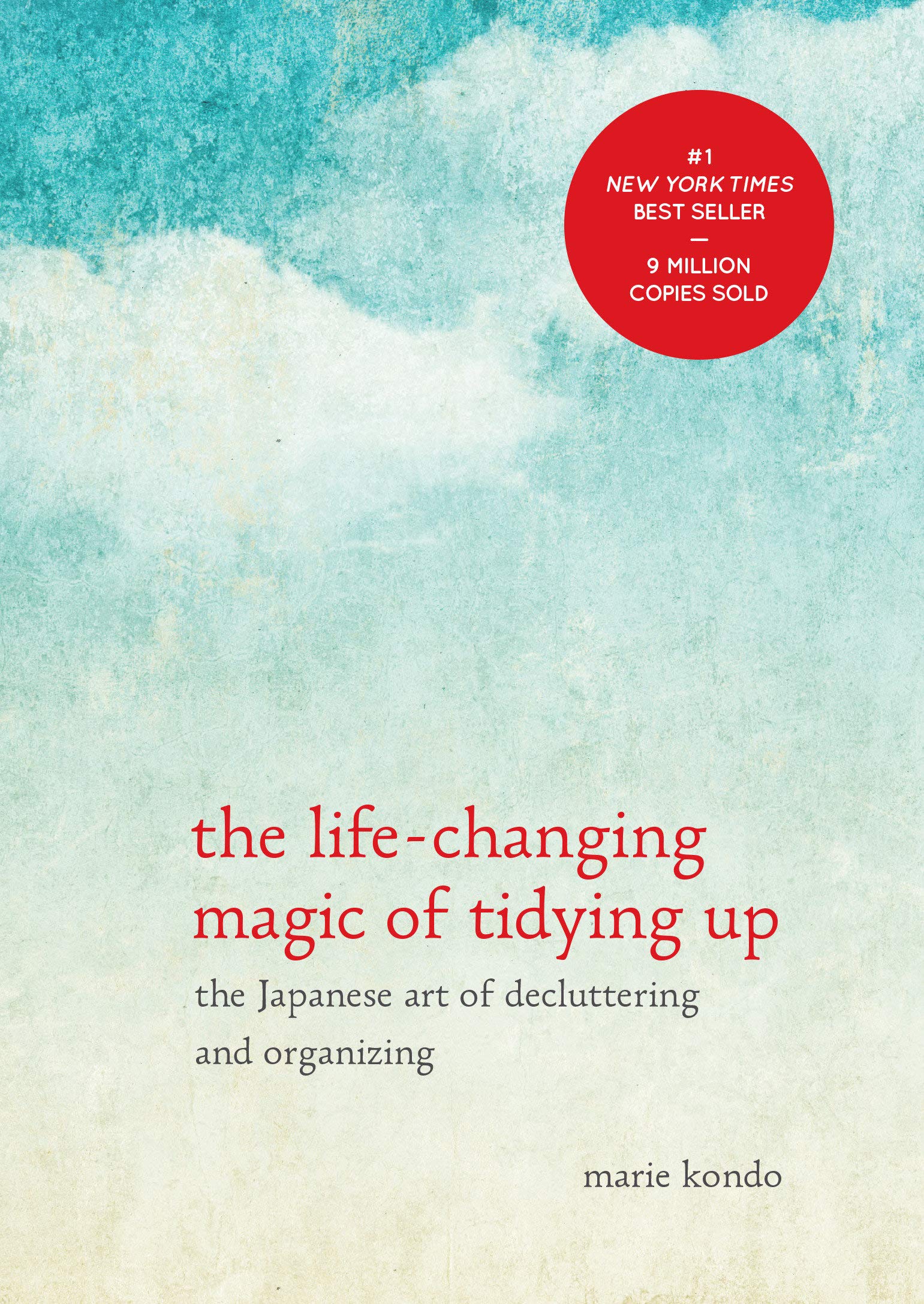
Image result for marie kondo book

First was The Life-Changing Magic of Tidying Up by Marie Kondo. It’s a good read, and she has some great stories and tips in there, but to be honest - a book about tidying just wasn’t doing it for me. So, I ended up reading only about half of it. But it’s by no means a bad book! In fact, it’s really good, and I picked up a few tidying tips that I’ve implemented into my home.

It might have been difficult for me to stay engaged with a book about tidying because I knew what book was next, and I just wanted to get to it. You see, the second book my sister let me borrow was Harry Potter and The Cursed Child by J.K. Rowling, Jack Thorne, and John Tiffany. And the Harry Potter nerd in me just wanted to get to it right away!!

So, today’s book review is on The Cursed Child because I actually read all of that book :)

Image result for cursed child book

Harry Potter and The Cursed Child is the story of Harry Potter’s son, Albus, some 17 years after Harry finishes school at Hogwarts. The book itself isn’t very long, and the fact that it’s a play script makes it easy to read even faster-- I ended up reading it in like 2 days, haha. I just couldn’t put it down!

But, the story focuses on Albus and his friend, Scorpius Malfoy (whom I love, by the way), as Albus strives to prove himself. It’s a story of complicated father-son relationships, loyalty, friendship, deception, self-discovery, and triumph.

And it’s wonderful.

While the book’s main characters are new to us, the authors work the story in a way that they bring in a lot of old and familiar faces, which brings a sense of nostalgia to those who have read the original Harry Potter books. I’m not going to get into details because I don’t want to give anything away, but even though this book is a play script, it does a fantastic job of keeping the reader engaged in every way.

I will say that this book kind of made me not like Harry even more than I did before (Harry was never my favorite character in the series). In The Cursed Child, Harry feels more like a whiner to me. But, the authors do a good job of also helping me realize that he’s also just trying his best. And, he didn’t have parents to set an example for him. All he had was the unloving Dursleys for his example of being a parent. So, I can see more of where he’s coming from in this book...but he’s still not my favorite. But, The Cursed Child does make me like Draco a lot more, and his son, Scorpious, who really is awesome.

So, if you’re a fan of Harry Potter, definitely go read The Cursed Child. It won’t take you long, but it will definitely be a memorable read!

P.S. IMBD says that there will be a Harry Potter and the Cursed Child movie in 2020, which, if true, I am so excited for! Seriously, as I was reading this book, I could picture it all in my head, and I think a movie could be awesome (granted, if they have a good director, etc.). I was also |this| close to seeing the Broadway play, which would’ve been awesome, but that didn’t work out. So, next time. For now, I will just enjoy the book :)

10 January 2019

I Did Not Even Exist!

Before I get into the review, I just wanted to share one of my New Year's resolutions with you guys: to read 20 books by the end of the year. That may not seem like much, but I've only just gotten back into reading regularly, and even though I don't have kids yet, my life is pretty busy! So, I think that's a good goal.  :)

For my first book of the year, I read Dr. Jekyll and Mr. Hyde by Robert Louis Stevenson.

Now, I know I just did a review on The Sociopath Next Door, which can be sort of a lot to take in, and Dr. Jekyll and Mr. Hyde isn't exactly the warm and fuzzy book most of us would want to read after reading about sociopaths. But, I literally just grabbed whatever book was next on my bookshelf, and this was it. So, here we go!

Image result for Dr. jekyll and mr hyde book, signet classic

The very first time I read this story was at my grandparent's house in Florence, Oregon. At that time, I didn't really understand much of the deeper meaning behind this story. Back then, it was the book that brought about the classic scary story: a scientists who creates some sort of medicine or potion that turns him into a monster. Since Stevenson penned this story, it's become an iconic mystery plot that we all know, even if we haven't ever read the book!

The gist of the story is just as I described: Dr. Jekyll is a respected, honorable doctor in London who creates a concoction of drugs that, when ingested, changes his form and even his very being into an evil man, Mr. Hyde. In essence, Dr. Jekyll created a way for his rather bored self to become submissive to a stronger, younger, and more evil desire within him (Mr. Hyde). Dr. Jekyll is a man with morals and honor. Mr. Hyde has neither, and is full of rage, hatred, and manipulation. 

Dr. Jekyll is aware of what Mr. Hyde does when he's 'alive', and the transformation becomes sort of an outlet where Dr. Jekyll can do whatever he wants as Mr. Hyde and get away with it because no one would suspect caring Mr. Jekyll. Eventually, however, Mr. Hyde starts taking over, transforming at will almost, and he is a completely separate person from Dr. Jekyll, only using the doctor's physical frame to keep him alive. At such a point, the doctor exclaims, "I did not even exist!" 

As I read this story, I thought of probably one of the most common interpretations of the plot: the Christian view of letting the inner evil within you take over. You see, Dr. Jekyll's experiment was more out of curiosity: could he physically separate the good and evil inside into two different forms? Once Mr. Hyde was born, it became easier for Dr. Jekyll to transform, to give way to Mr. Hyde. However, at one point, Dr. Jekyll had had enough of Mr. Hyde, and he shut the monster away inside for months. During that time, Mr. Hyde grew impatient and antsy, and when the doctor gave way once again, Mr. Hyde sprang forth with greater rage than before. And so he did every time since until the doctor lost all strength to fight against the monster he created. 

Such can we be if we give way to the evil and temptations we face within ourselves. Giving way to evil out of curiosity or in a seemingly small and harmless way puts that taste in our mouth, gives a hint of what we can do as a 'different person'. Of course, we're not changing forms like Dr. Jekyll did, but we can in essence become a different person, driven by instincts and desires of the evil instead of the good. 

While this is a common and fairly straightforward comparison, I really enjoyed what Dan Chaon discussed in his afterword -- probably because they coincide with what I just read in The Sociopath Next Door. In his afterword, Chaon talks of serial killers, like Jack the Ripper, and how they are a real-life example of a Dr. Jekyll/Mr. Hyde situation. You see, most serial killers don't appear as serial killers. They are usually the friendly, nice guys at work or around the neighborhood (I use guys here just in the example, but I'm not saying that serial killers are only males). That's their Dr. Jekyll mask. Then we find out that they have killed people, and it's almost as if their former identity "did not even exist." 

I'm sorry to use a somewhat graphic example; that's the one Chaon gives in his thoughts. But the same could be for just about anyone, not just serial killers. It could happen on even the slightest of ways when we find out someone did or said something that doesn't seem like them- it's as if, in that moment, their Mr. Hyde took over, that they are not the person we thought because they simply acted as someone else. 

It's an interesting thought, and I hope this Jekyll/Hyde parallel isn't something we run into on a regular basis with ourselves or those around us. We should certainly be who we are, be the same person no matter what, always living by the same morals, ethics, values, standards, etc. If we live a life of double identity, we are bound to come to the same end that Dr. Jekyll did: where one identity takes over the other, and usually it's the more wicked one that wins. A simple solution to avoid all that: just be you, and be good.  :)